What it’s really like to have skin cancer
Back in 2018, I had a lot of time to reflect and wanted to share my story of skin cancer.
While that surgery was the most intense, I’d been having minor surgery for the removal of skin cancers since I was 25, including a melanoma in 2006 when I was 30, and a ‘collision tumour’ at 46, which was squamous cell carcinoma and melanoma. Most of my skin cancers have been basal cell carcinoma — the relatively benign and most common kind.
That might be considered nothing to worry about, and here in sunny Western Australia, they are so common as to be frequently disregarded.
But common does not mean insignificant.
Treatments
After a few minor skin cancer procedures by GPs, when I was around 27 a small scabby spot appeared on my right cheek that bled when knocked. I had it removed under local anaesthetic while my partner, Satyam, stayed in the car with our baby son. I had no idea how big the cut would be and was shocked to see the size of the incision for such a tiny spot.
I’ve had surgery to remove lesions from my ears, neck, tip of my nose, forehead and eyebrow. At last count there were 17 lesions removed from my face and 5 from my back.
In between surgeries I tried a natural salve (don’t do it) and Efudix cream, which causes blistering and peeling and may shrink the area required to be removed. It didn’t seem to work for me.
I see the dermatologist regularly for checkups. Despite knowing there were more basal cell carcinomas to be removed, I delayed treatment for over a year. I just couldn’t bear the interruption to my life.
Eventually, during my PhD I undertook Acceptance and Commitment Therapy (ACT) training. It highlighted the things I was avoiding and inspired me to take action.
Information
I’m a researcher, so it’s no problem for me to source information. However, while I read journal articles about the surgery, I struggled to find clear information about the recovery process.
The most helpful sources were online groups where people with cancer or facial differences shared their experiences. They were empathetic, practical and supportive. I was deeply moved by the kindness of strangers and the power of online community.
Prognosis
These tiny red lesions that appear every year or so are almost all basal cell carcinomas, so they are slow growing and not life threatening. The odds are I will have more of them pop up as the years go by, however I don’t think I’ll ever get used to having surgery — especially on my face.
There’s also an increased risk of other cancers, so I’m always working on living my best “anti-cancer” lifestyle.
Emotions
Each time I’ve been diagnosed I’ve taken it with a fair bit of resignation. I try to move through the process with equanimity. However, the repeated interruption to my life frustrates me and makes it hard to plan for my business, study and family holidays.
I’m the classic impatient patient. I am generally in control of my life and keeping relative order amongst the chaos. Having to surrender to waiting for appointments, waiting for results, and following doctor’s orders grates.
I notice that clothes make a difference — I can take on the role of patient only when I have taken off my bra and donned the backless gown of humility.
Roles
I feared that the surgery would drastically alter the roles I play in my life. I use my face as a tool for communicating with clients and audiences. I imagined the worst kind of catastrophic loss of ability to be a storyteller.
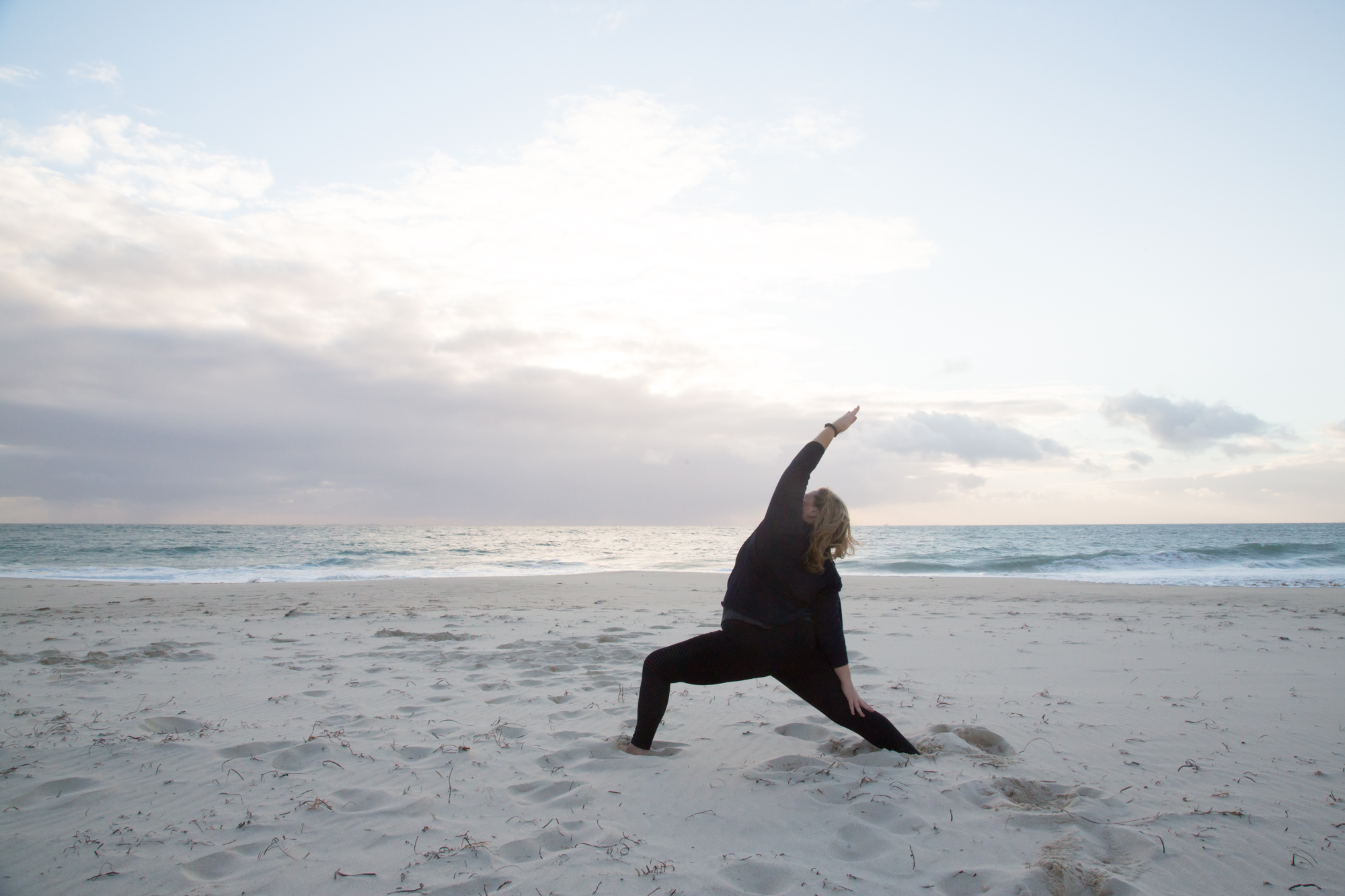
Fortunately this hasn’t been as bad as my mental worst case scenario predictions. Just 2.5 weeks after the operation, I co-facilitated a weekend of Yoga Nidra and Restorative teacher training for 30 wonderful participants who accepted me as I was.
Self-care
I longed to get back to my yoga practice but adhered to the six-week recommendation as I wanted the best possible results. Before surgery I exercised regularly and practiced yoga. After surgery I moved as much as I could in safe ways — gentle strengthening, restorative yoga, and walking. Journaling, working a little, staying in touch with friends and resting all helped the time pass.
Appearance
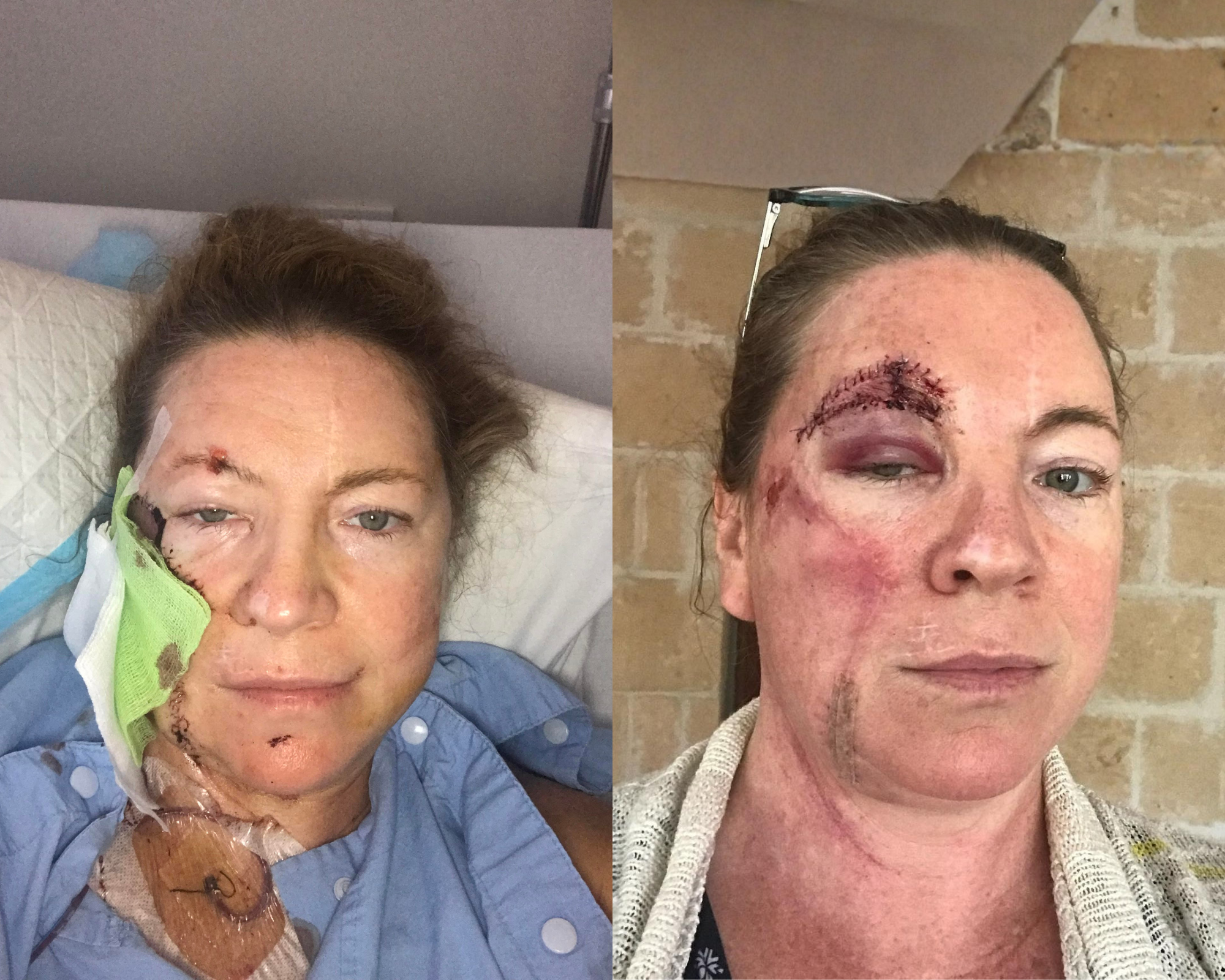
I talk a lot about body acceptance, yet my swollen and uneven face bothered me. People noticed. Some asked questions. Some ignored it. Healing was going well, but I looked forward to the day when I could “pass” again.
Distress & Growth
At around day five when the bruising was worst I felt very sorry for myself. I was bored, restless and uncomfortable. As I resumed my normal roles and could go for walks again, the distress gradually reduced. I’ve been interested in post-traumatic growth and have had time to reflect on my life and savour the relationships that matter. The kindness I experienced filled me with hope and appreciation.
A Message
Take care of your skin.
If you live in a culture where a tan is considered attractive, just fake it — the alternative is not worth the suffering. We all have our traumas and challenges. The most blessed appearing life can hide deep sorrow.
I hope my story inspires empathy, a willingness to hear and understand each other, and to seek beauty beyond the superficial.
– Dr Chandrika Gibson